
Have I saved Spurs?
A (somewhat) realistic Football Manager 2026 relegation battle – Part 2 of 2

Last week, we kicked off this experiment, taking over Tottenham Hotspur in a realistic Football Manager 2026 scenario to try and avoid relegation.
In Part 1, we broke down the context, tactical setup, and the first crucial matches (you can catch up here).
Now, it’s time to see how the rest of the season unfolded.
The trip to Aston Villa was always going to be one of the toughest fixtures left. We were close to safety, so we made a pragmatic call. We brought in João Palhinha for more experience and lowered the pressing line to avoid giving Villa too much space between the lines.
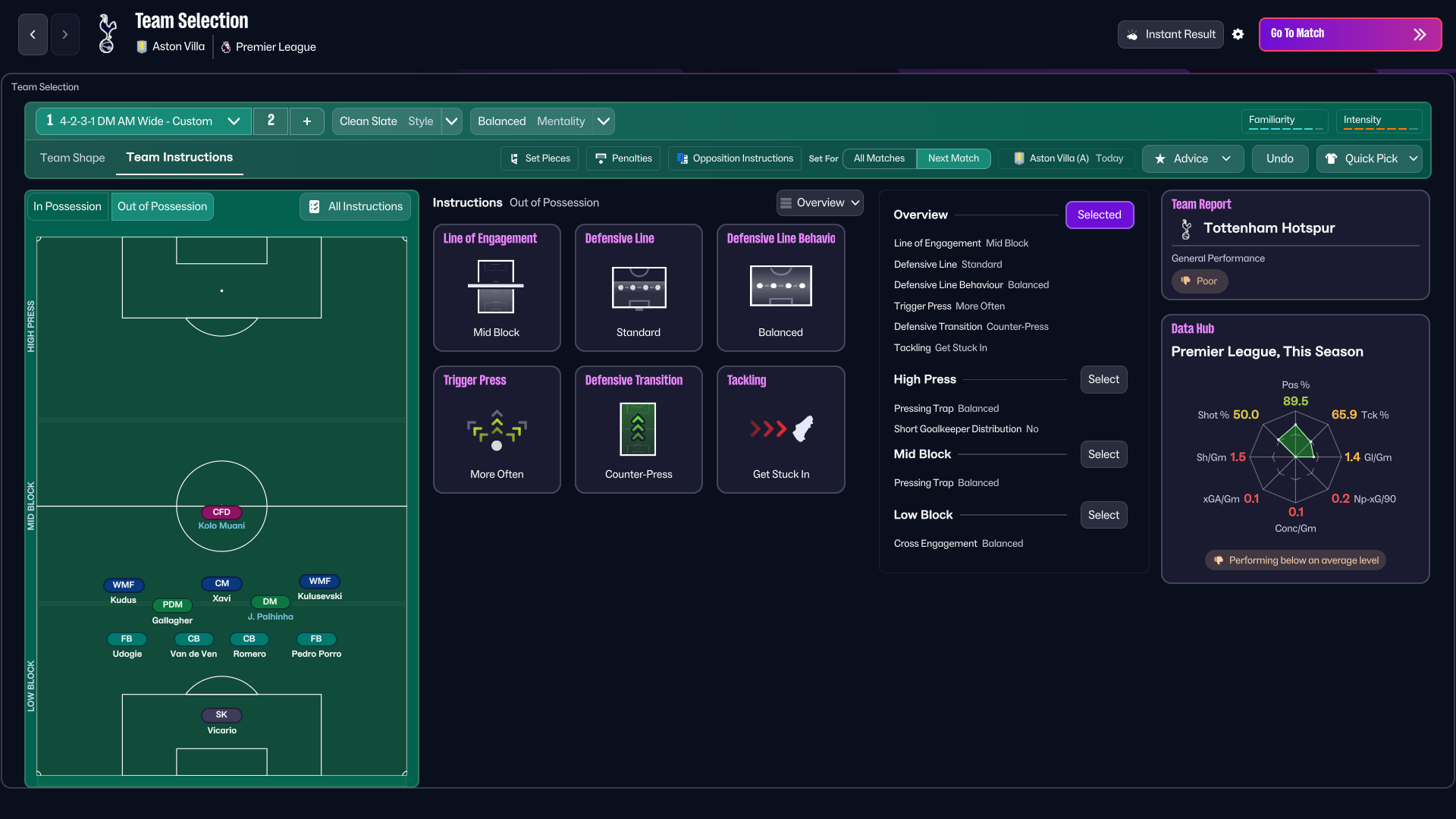
The start was encouraging, Pedro Porro hit the bar early, but the game quickly turned chaotic. Palhinha himself conceded a penalty, our third in as many matches, but once again Guglielmo Vicario bailed us out. Still, the warning signs were clear. Sitting deeper limited Villa’s access to the box, but allowed too many shots from the edge, and eventually they took the lead with Kamara.
We reacted by pushing the lines slightly higher, and it worked. A quick move through midfield ended with Xavi Simons finding Mohammed Kudus wide, who finished for 1–1.
At that point, the balance felt right. Then the game flipped again.
A red card for Porro early in the second half forced us to adapt. We dropped into a more compact shape, sacrificing attacking structure to protect the result, and tried to be more direct in possession.
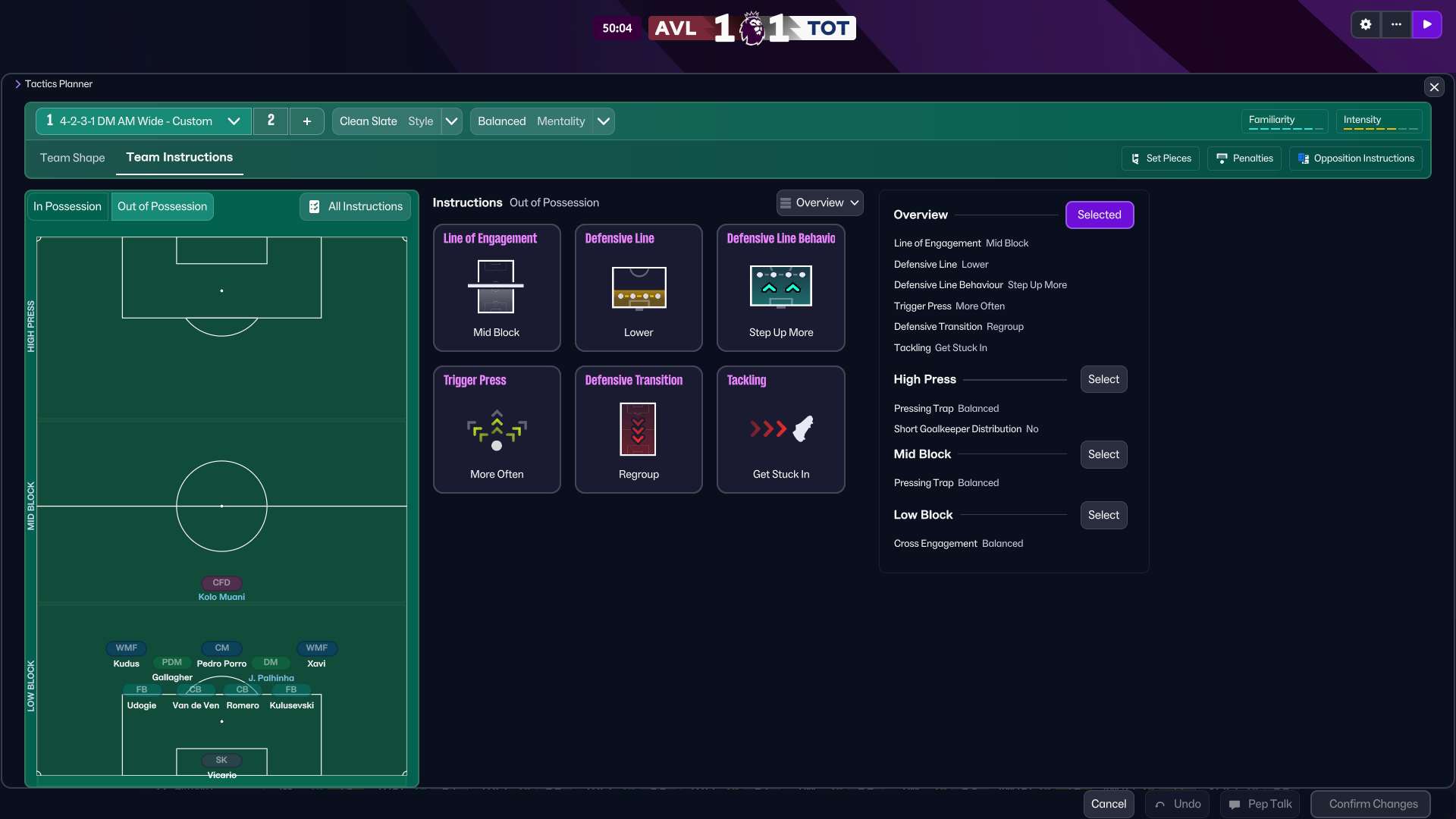
It wasn’t enough. Villa regained control and scored the winner, and although we had a late chance to equalise, we couldn’t take it. A 2–1 loss, but not a collapse. With a penalty conceded, a red card, and still moments of control, it felt like a game where we could have taken more.
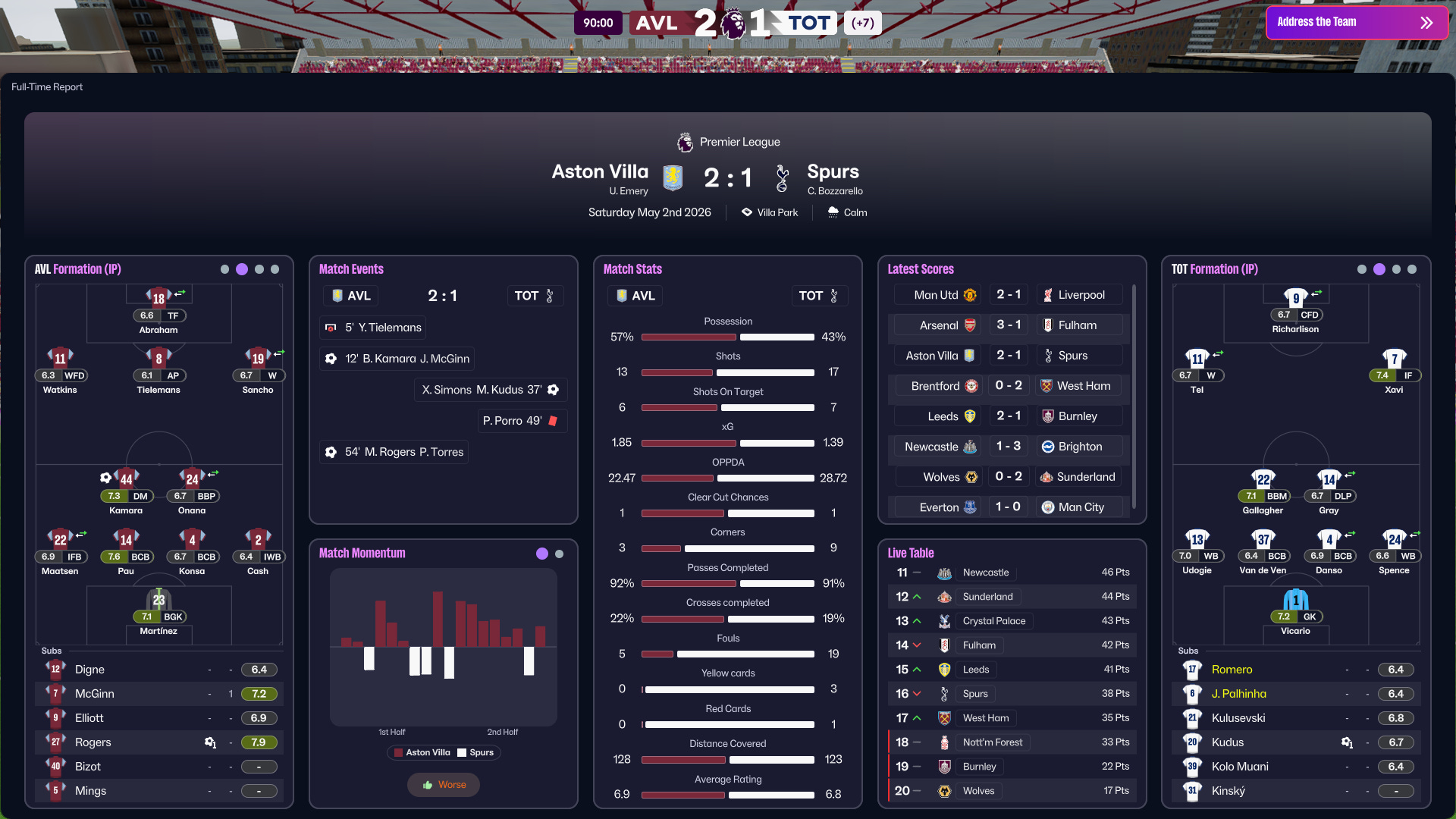
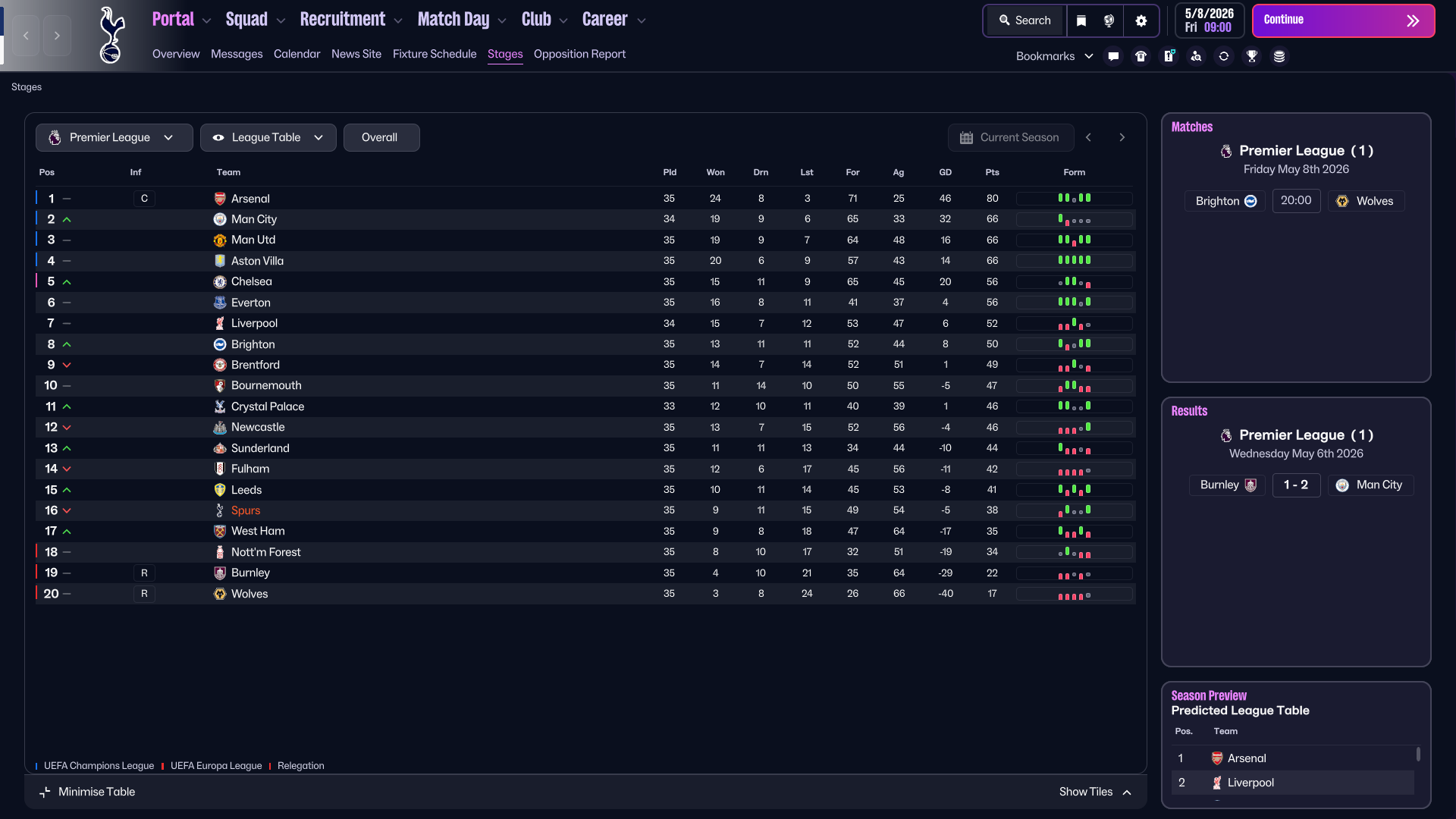
This brought us back to 16th place, 3 points above a winning West Ham and 4 points away from a drawing Nottingham Forest, sitting in the red zone.
Next came a crucial match against 15th-place Leeds United. With Porro suspended, we brought in Djed Spence and made a small attacking tweak, initially focusing play down the wings to exploit Leeds’ shape with an inverted fullback on the left and a pressing fullback on the right.
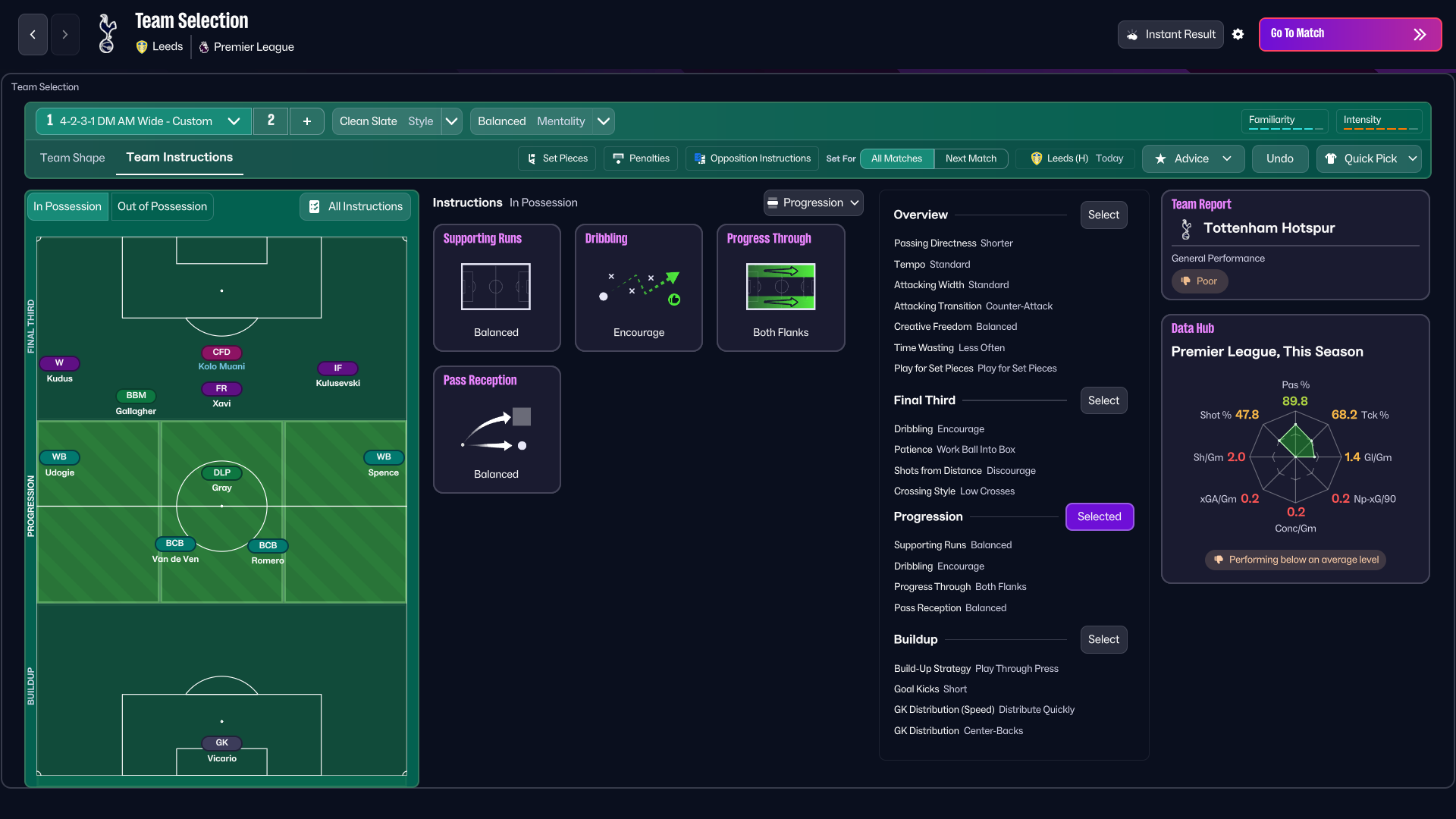
It didn’t quite work.
We had chances, but struggled to control possession and involve Xavi Simons consistently. At half-time, we adjusted, removed the wide focus, brought the play more centrally, and gave Simons an individual pep talk.
The response was immediate.
Within a minute of the restart, he won the ball high and assisted Randal Kolo Muani for 1–0. Shortly after, another combination between Simons, Dejan Kulusevski, and Kolo Muani made it 2–0.
The key lesson was clear. Even with a free role, Simons still needed the structure to stay involved. Too much focus wide had isolated him.
From there, we managed the game with simple substitutions and secured a vital win.
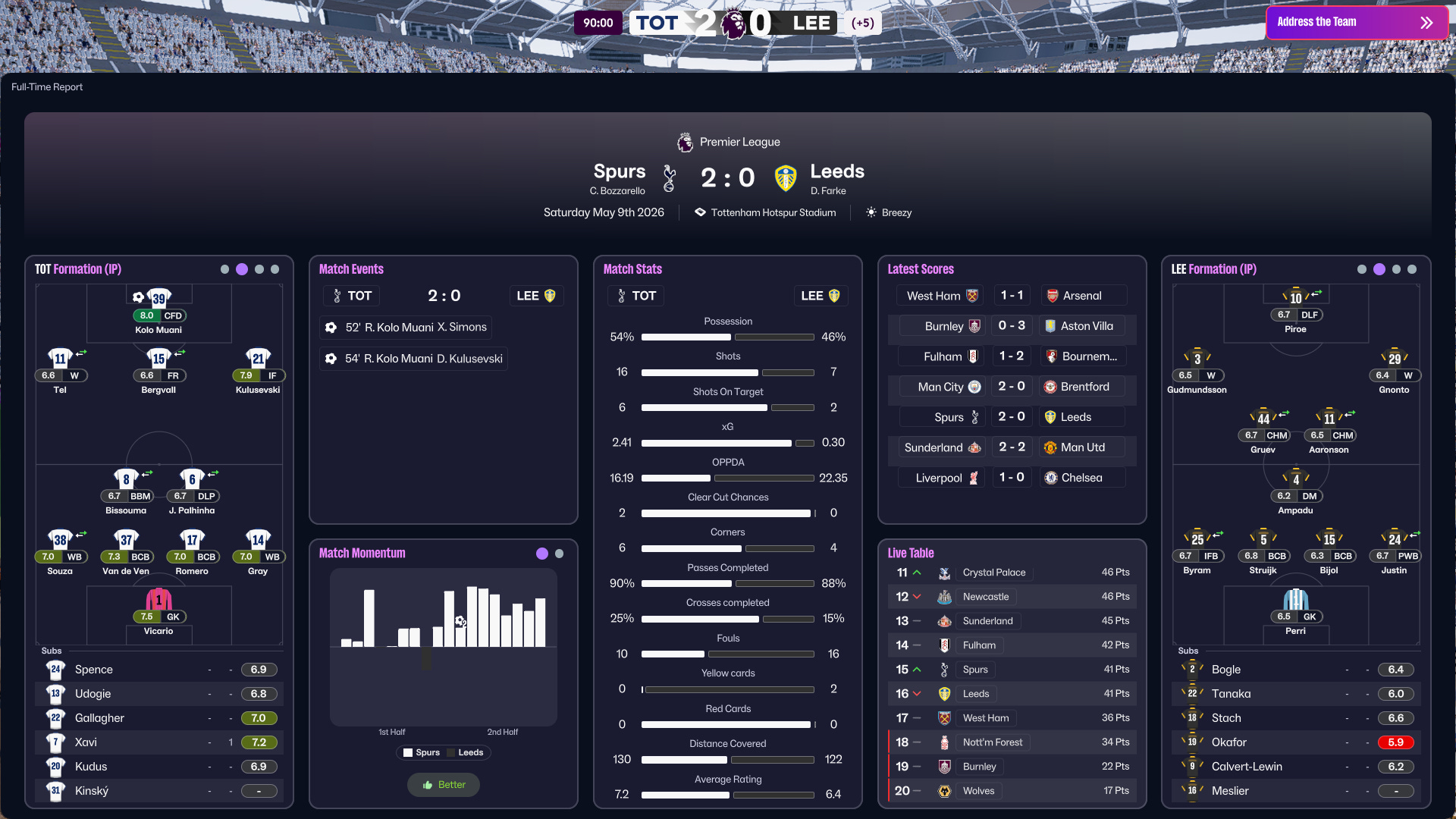
The result took us to 41 points, effectively guaranteeing survival! From relegation candidates to safe with 2 games to spare, a huge step.
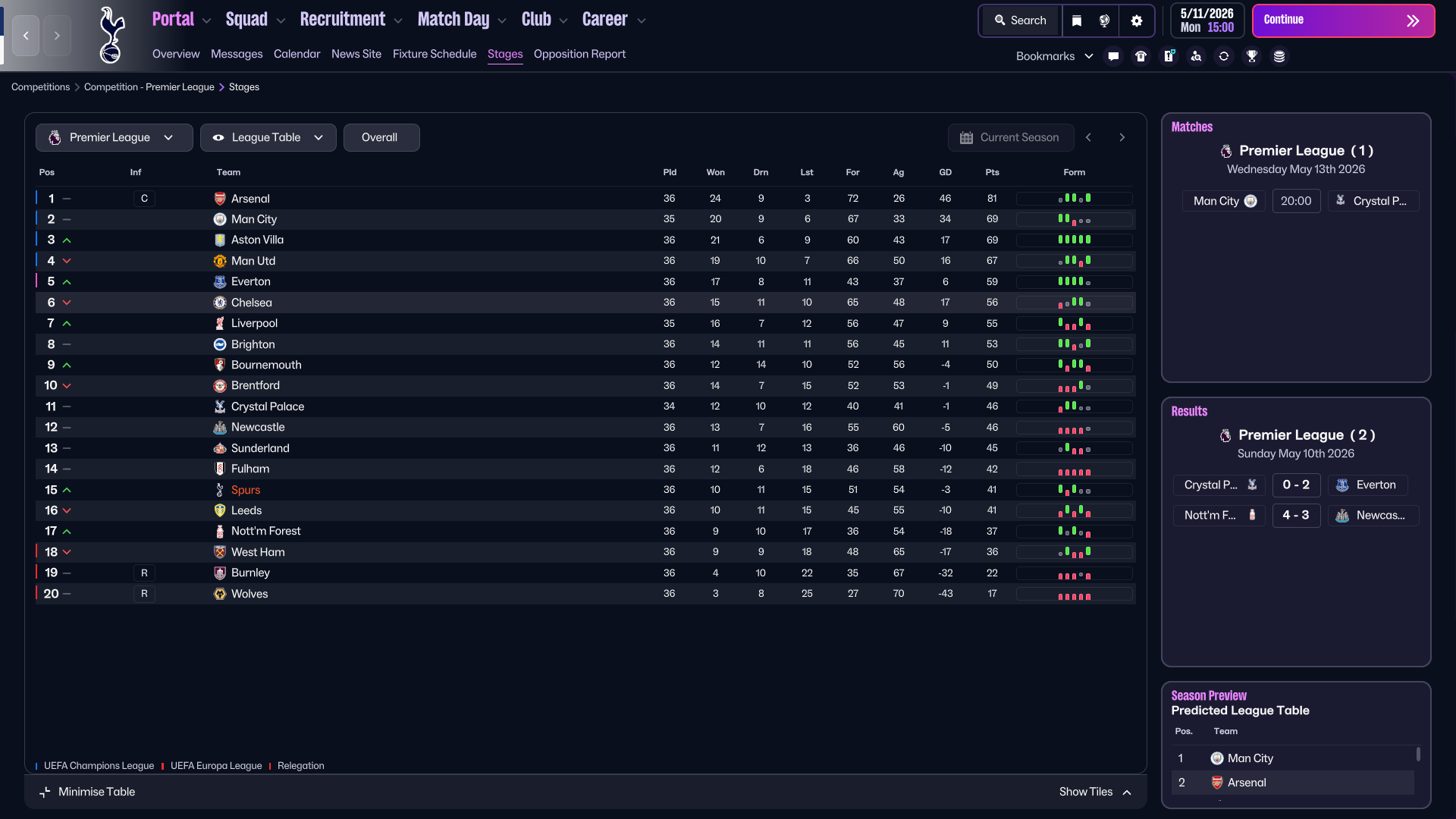
With safety secured, we approached the away game against Chelsea with ambition, but also realism. Injuries continued to hurt us, especially in defence with Van de Ven out for the remainder of the season, and we had to adapt again.
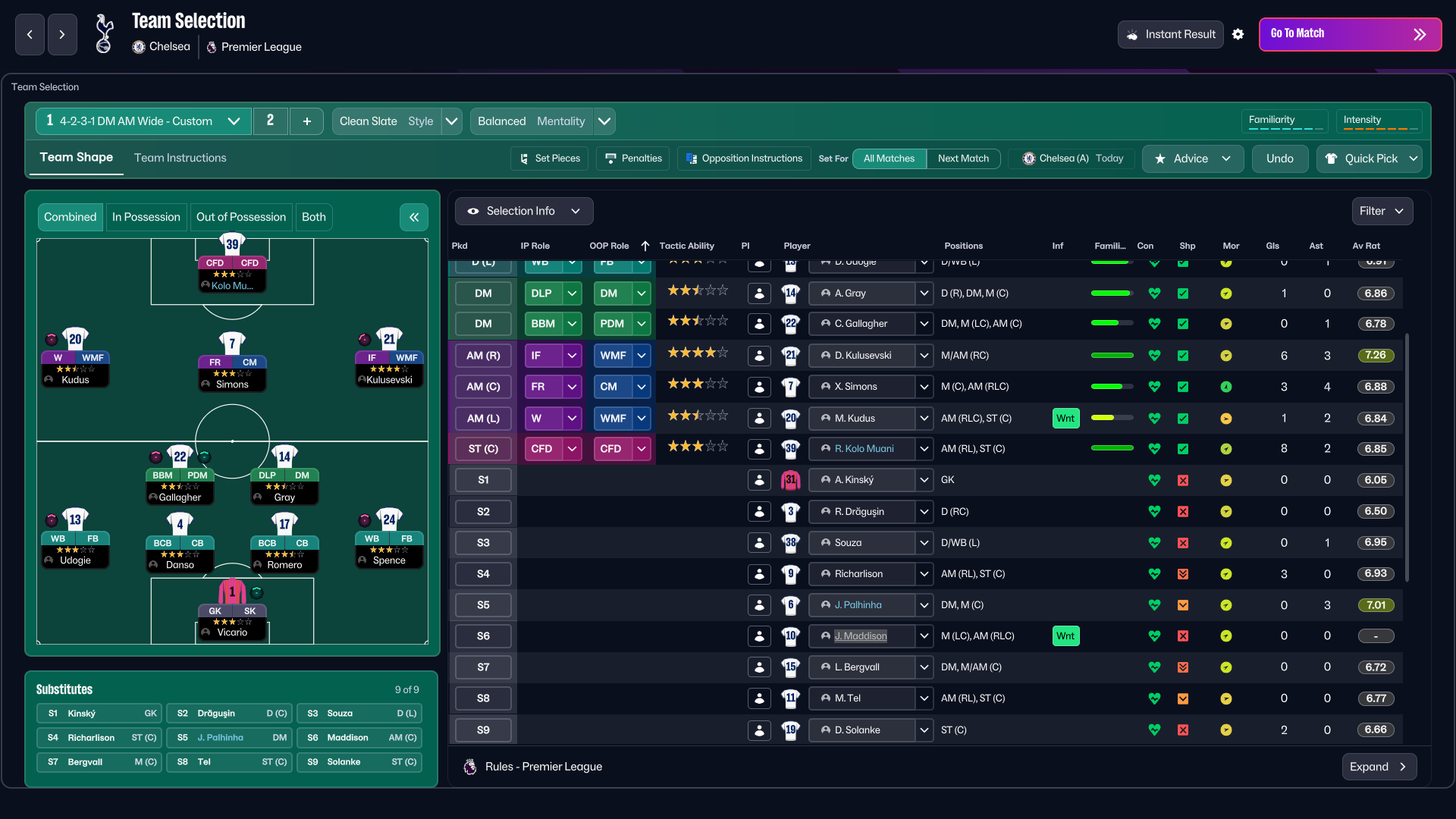
The match showed the limits of the system against top opposition. A turnover in midfield led to a goal from Cole Palmer, and from there we struggled to create. We tried shifting to two strikers, even pushing Gallagher higher in a 4-1-3-2, but nothing really worked. Too few chances, too little control.
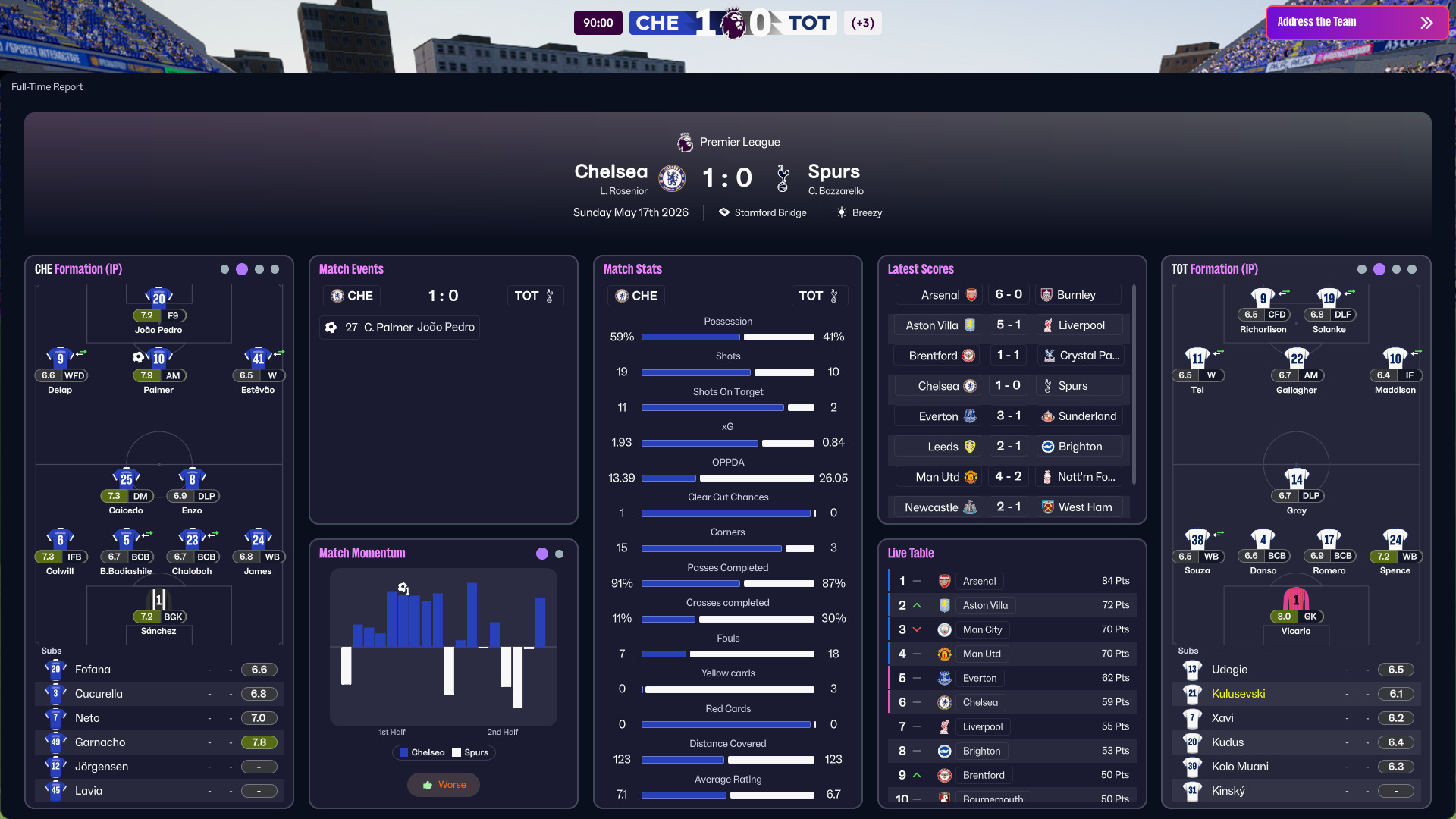
A deserved defeat, and a reminder that while the system worked in the relegation battle, it still had clear limits against stronger teams. Back to 16th place.
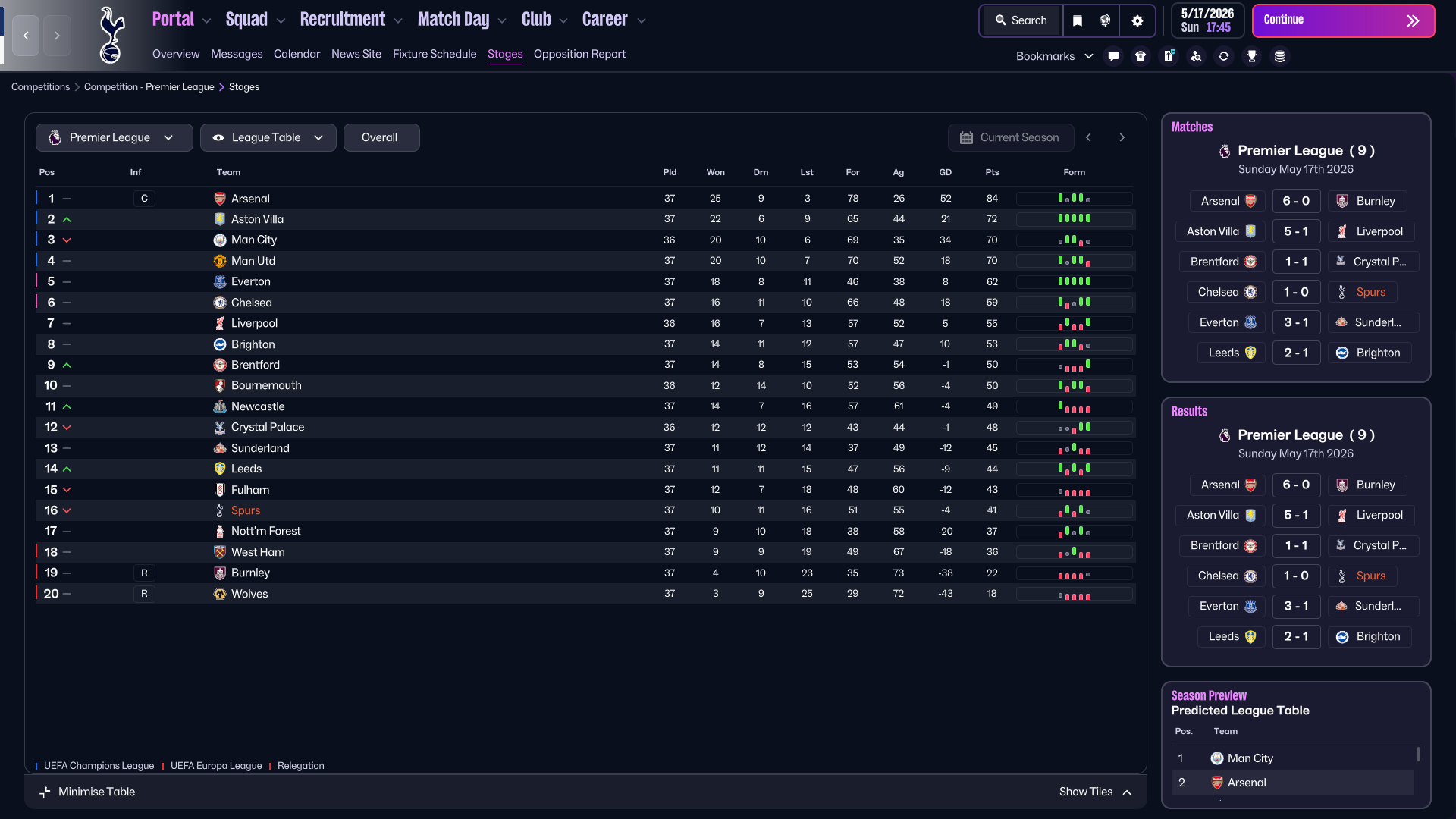
The final match, at home against Everton, was more about performance than pressure. Survival was secured, but we wanted to finish strong.
I gave Mathys Tel a start on the left, and he was immediately our most dangerous player. Everton took an early lead through a deflected cross-shot, but we responded well, creating consistently through Tel’s dribbling and combinations. We were the better team in the first half, even if the score said otherwise.
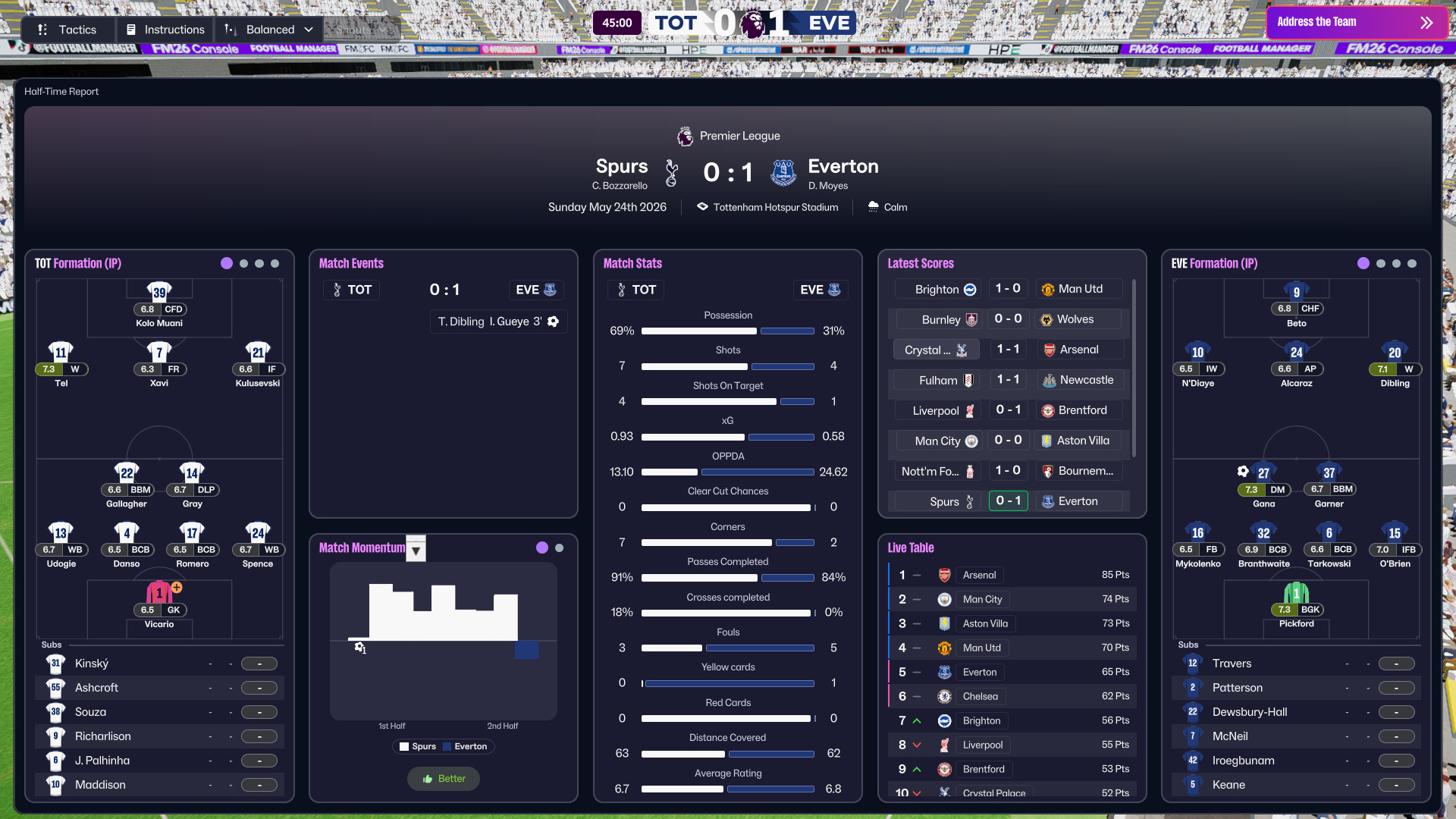
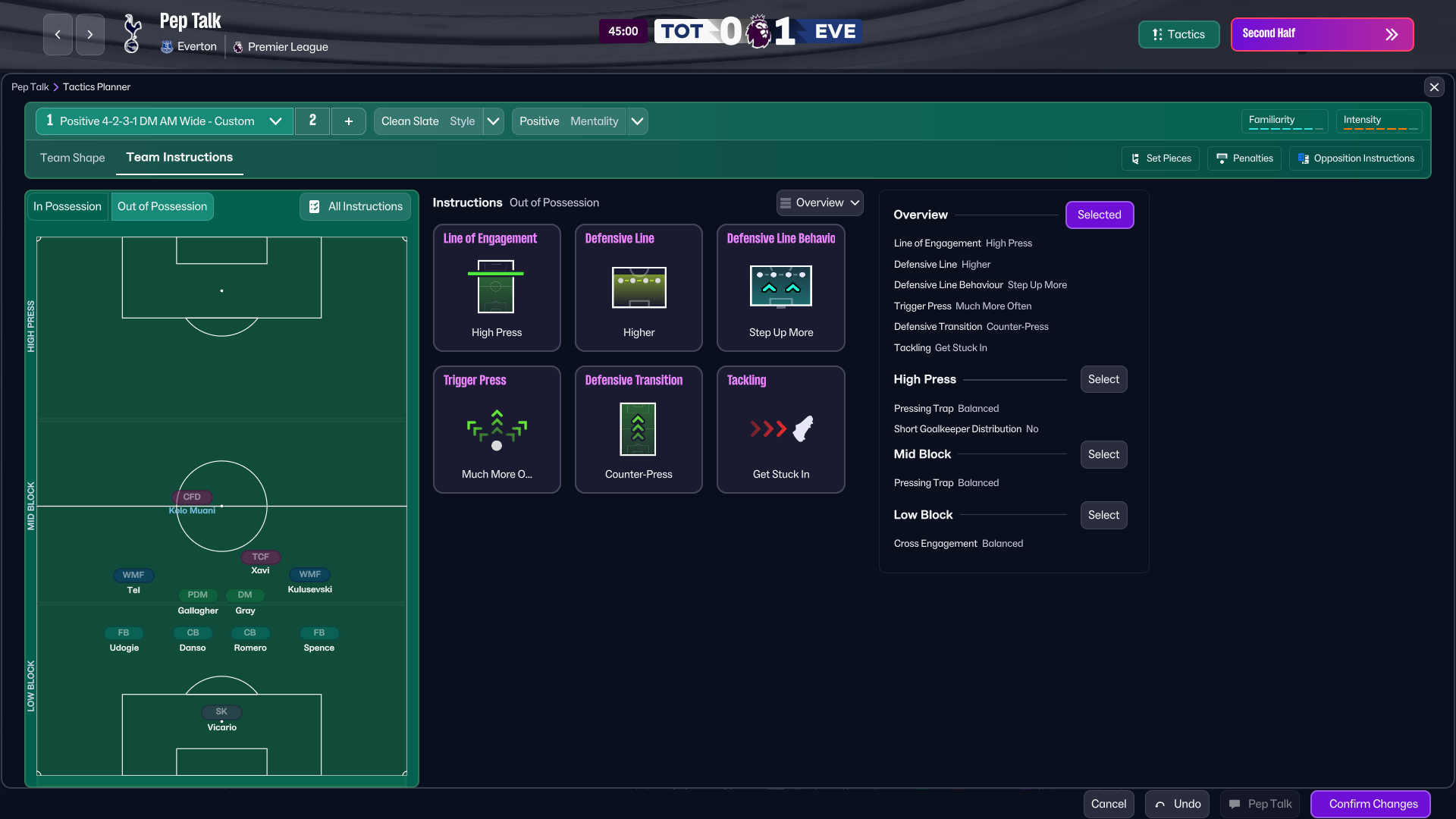
At half-time, we increased intensity. We pushed into a more aggressive 4-4-2 pressing shape, utilising Xavi as a secondary striker, raising the defensive line and committing more bodies forward.
It paid off.
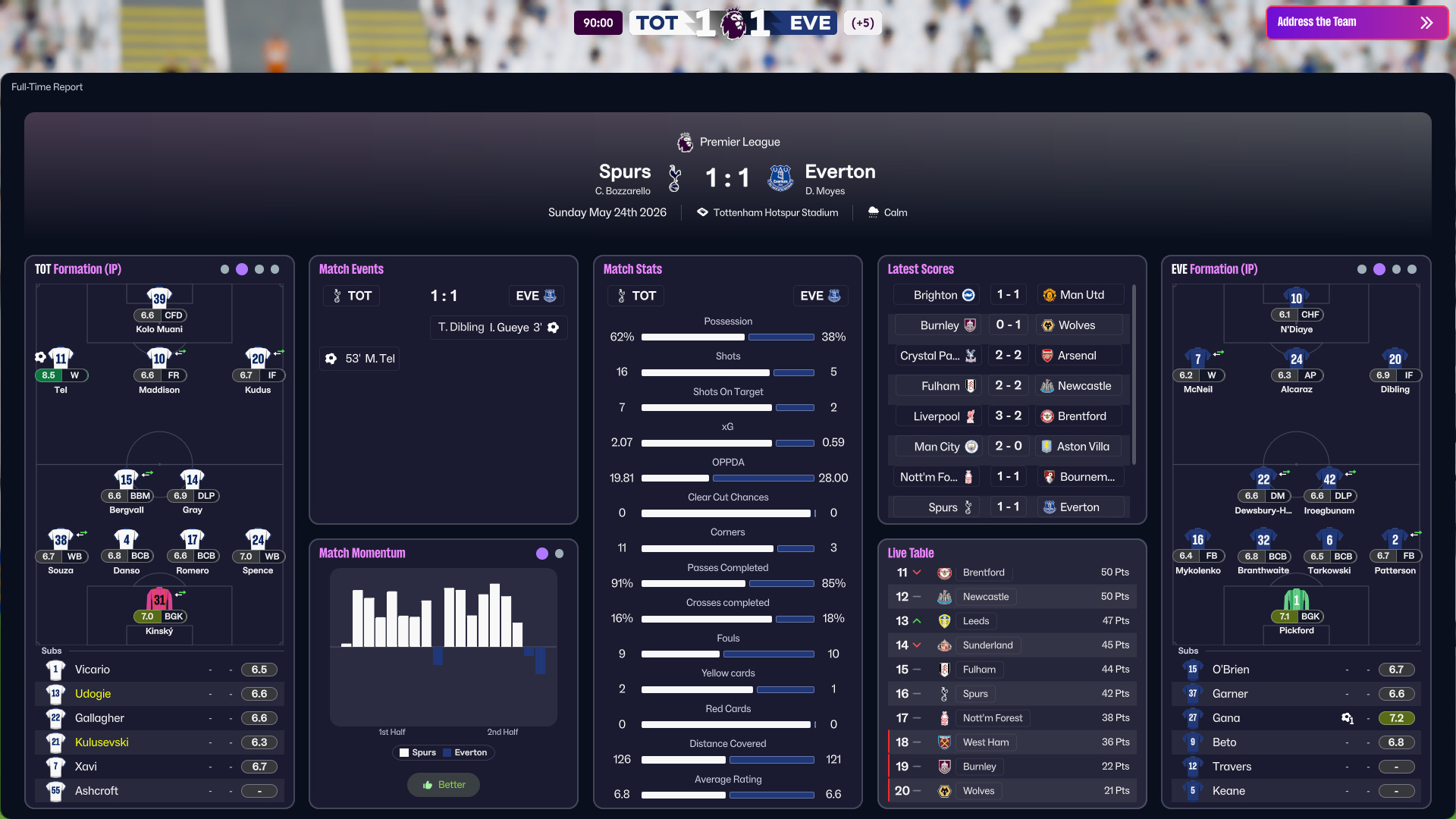
Tel, after a brilliant solo run inside the box, scored the equaliser early in the second half. From there, we pushed for the winner, and had a late chance through Souza, but couldn’t convert.
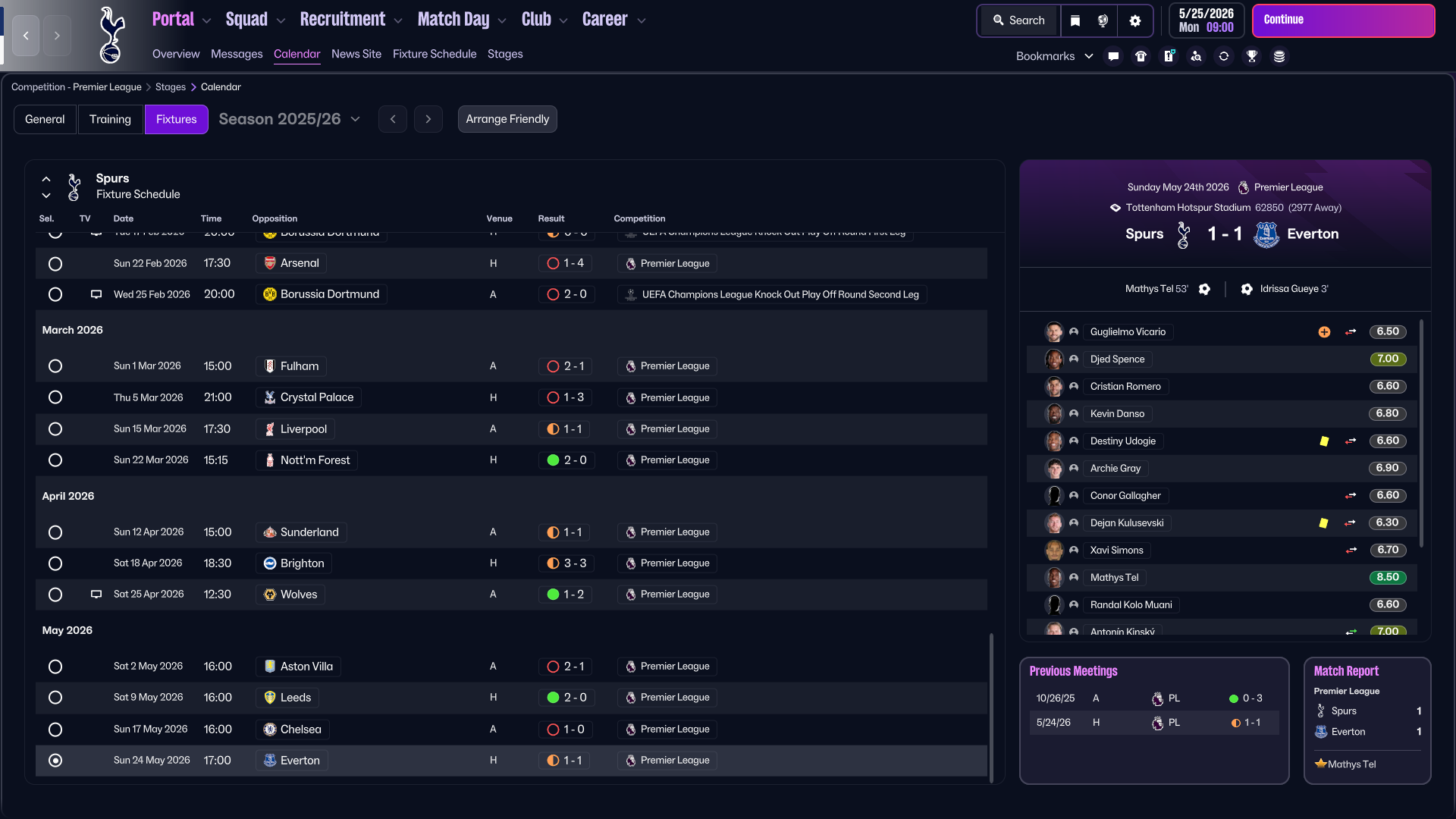
The game ended 1–1. Slight frustration, but overall a positive performance against a very good Everton side that finished 5th in this simulation. With this draw actually costing them direct Champions League qualification.
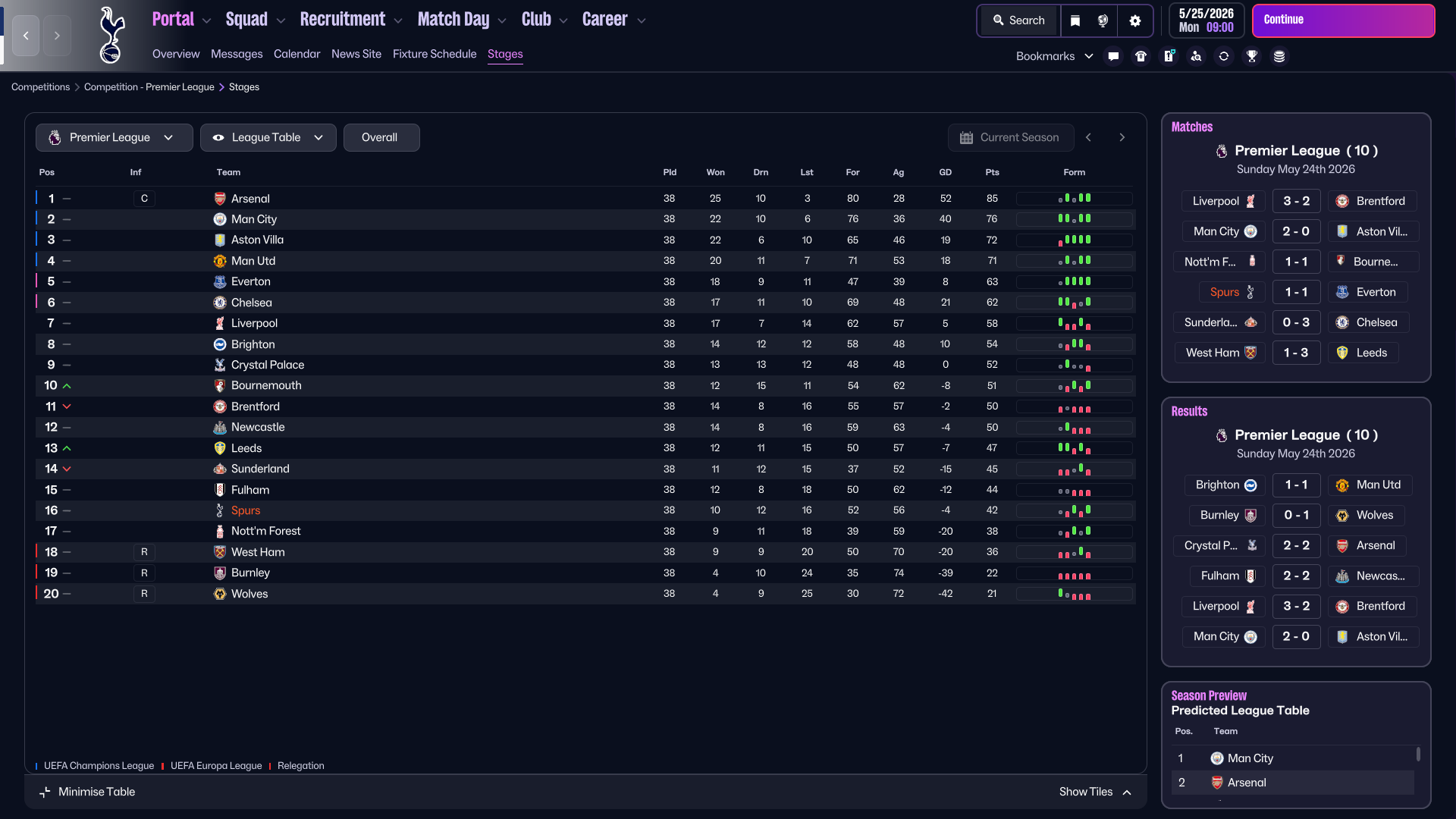
We finished on 42 points.
For Tottenham, that’s obviously below expectations. But given the situation, it’s a solid recovery. Survival was secured with room to spare, we were unbeaten against “top 6” sides, and more importantly, we started to build a functional identity.
This experiment doesn’t prove that these exact choices would “fix” Tottenham in real life. But some patterns felt familiar. The players who performed, the recurring defensive errors, and the difficulty in controlling games all reflected real issues.
The main takeaway is simple. At this stage, Tottenham are not a team that can suddenly become defensively perfect. The solution isn’t to sit deep and hope. It’s about being proactive, creating, and finding the right balance between structure and freedom.
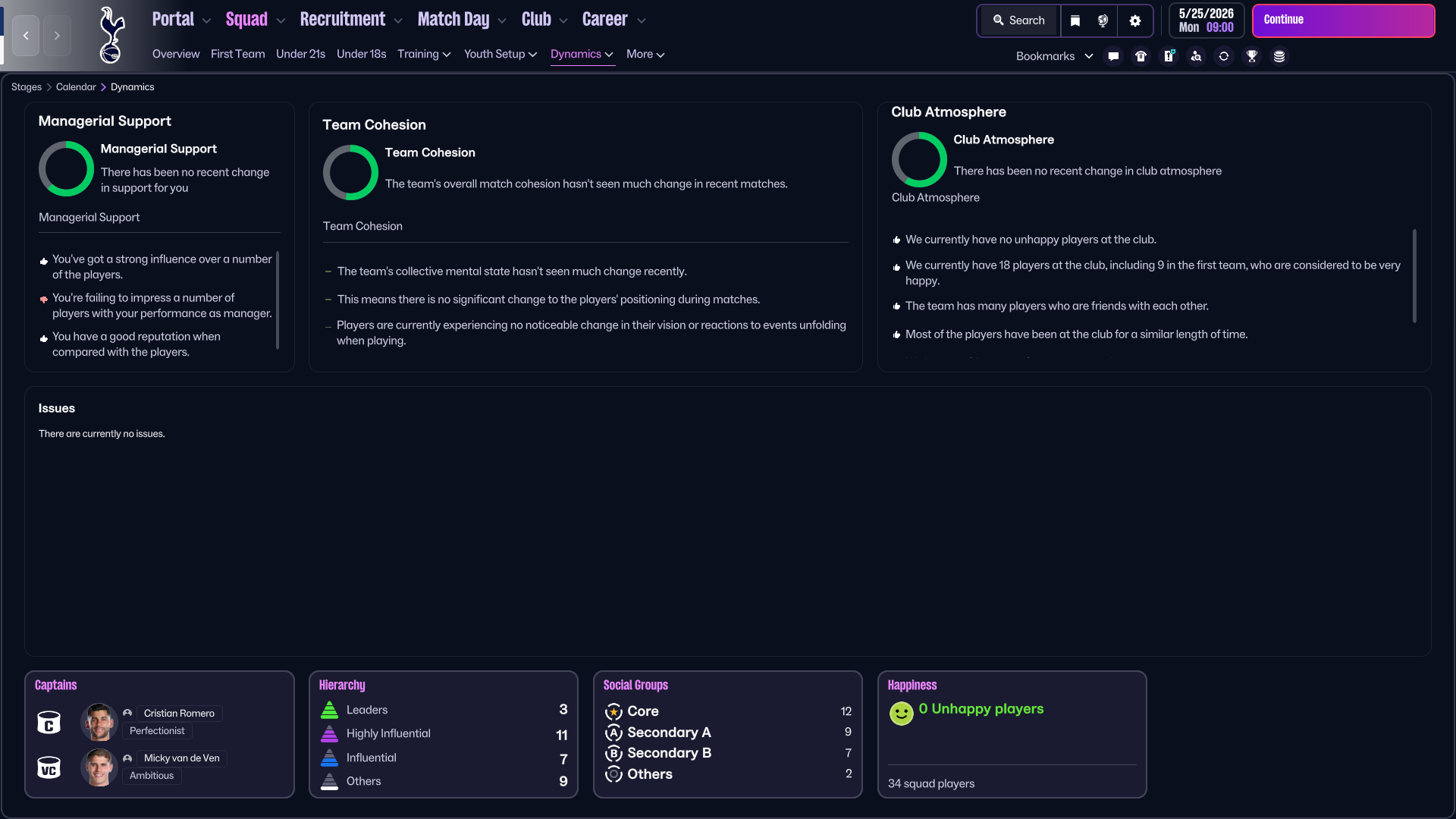
Just as important is the human side. Throughout the run, managing morale, praising performances, and keeping the squad engaged played a big role. Tactics matter, but so does belief. And in the end, the club atmosphere was actually pretty positive.
That’s why the profile of the manager matters. Someone with clear ideas, but also presence and credibility. Someone who can guide both the structure and the mentality of the team.
Whether that’s Roberto De Zerbi or not remains to be seen.
What this experiment shows is that survival was possible. Not through shortcuts, but through structure, adaptation, and a bit of resilience.
And maybe, just maybe, reality can follow.